Unenforceable law
Litter fines exist on the books in most states, but without evidence of where and when litter accumulates, enforcement is effectively guesswork. The revenue — and the deterrent — is lost.
Clip-on.AI turns volunteer cleanup walks into structured environmental data. A camera on the grabber, an AI model that sees what gets picked up, and a report that tells communities and city councils what's actually on their roadsides.
Washington State alone misses an estimated $929 million in fines each year, simply because there's no practical way to enforce the laws that penalize drivers who litter.
Litter fines exist on the books in most states, but without evidence of where and when litter accumulates, enforcement is effectively guesswork. The revenue — and the deterrent — is lost.
Human waste in litter is a strong indicator of public health risk. A rise in bedding and clothing correlates closely with a rise in the local homeless population. Nobody is reading these signals systematically.
Homelessness has cost California $25 billion over five years and Washington $5.3 billion over eleven — largely without ground-truth data on where conditions are changing.
No manual counting, no clipboards. Volunteers walk and clean exactly as they always have — the system captures, detects, classifies, and reports on its own.
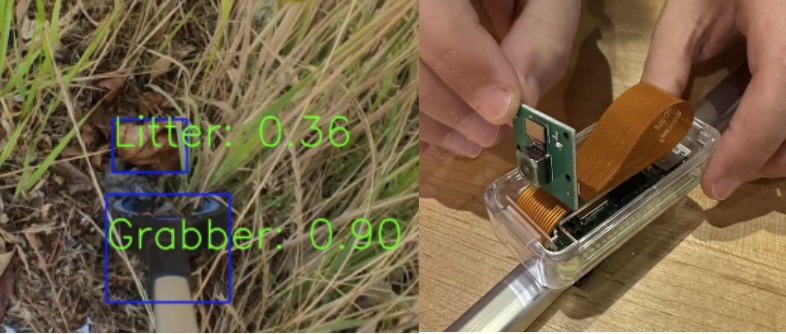
A lightweight object detection model runs directly on the camera hardware in real time. It spots every piece of litter in the frame and crops it out for closer analysis.
Cropped images go to a vision-language model that determines category, size, material, condition, and hazard status — then writes a plain-English description of each item.
Mounts to any grabber on the market, pointing at the grabber head. It captures close-ups at the exact moment of pickup — and the jaws (~8 cm wide) act as a built-in size reference.
Worn by the volunteer, capturing a first-person egocentric view of the whole cleanup scene as they walk — context the clip-on camera can't see on its own.
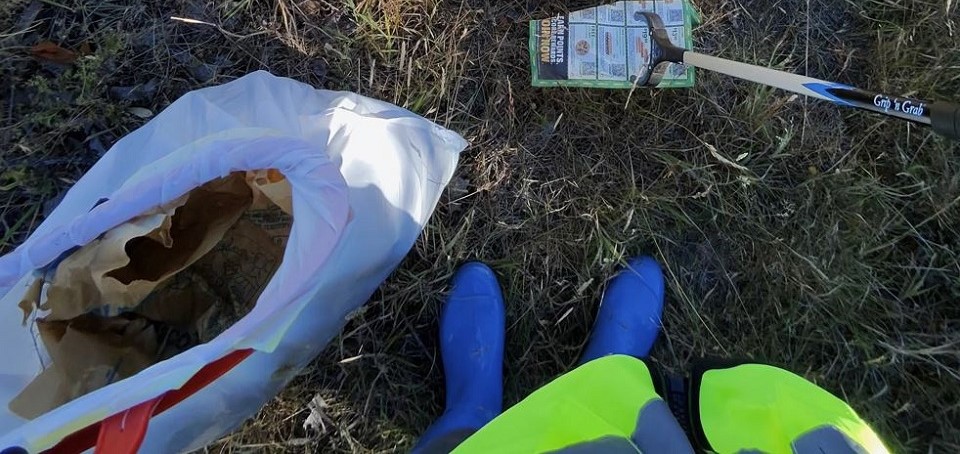
Every weekend, volunteers head out with grabbers and bags. They pick up hundreds of items — 10 to 25 bags each time — and when the walk is over, all that information disappears into a landfill.
We replace that loss with a report, generated automatically:
4,499 images across 14 cleanup sessions from December 2023 through January 2025, collected in Kirkland, Bothell, Woodinville, and Bellevue. Every image annotated with bounding boxes and a detailed category label.
We ran a head-to-head benchmark on 241 carefully selected litter images across three leading vision models. Gemini won on both accuracy and cost, making it our primary cloud classifier.
| Provider | Broad category | Exact category | Size accuracy | Cost / image |
|---|---|---|---|---|
| Google Gemini Selected | 73.4% | 23.7% | 83.4% | $0.003 |
| OpenAI GPT-4.1 | 66.4% | 23.2% | 71.0% | $0.010 |
| Anthropic Claude | 59.8% | 12.0% | 79.7% | $0.005 |
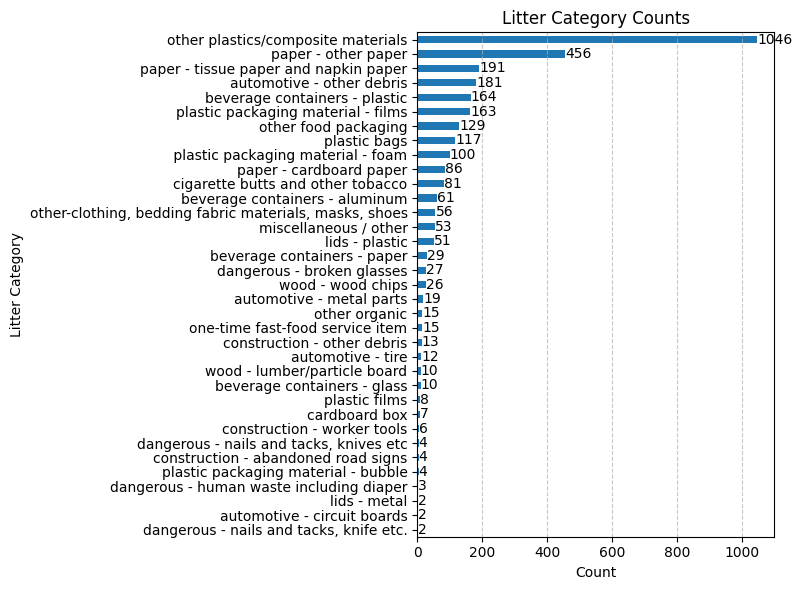
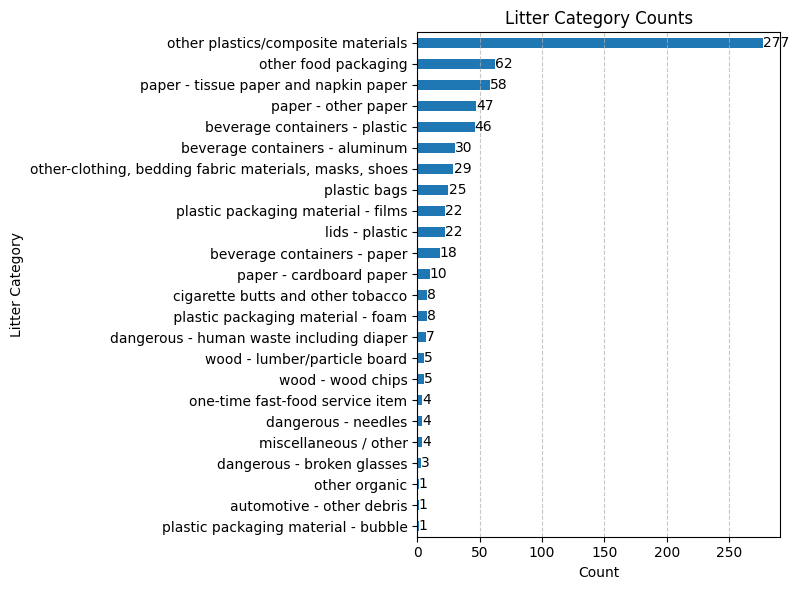
A sample pickup report of 3,000 pieces of litter grouped into 35 categories. Kirkland is drawn from Highway 405 exits 18–20; Renton from exit 5. Note how sharply the composition diverges — particularly in the dangerous-items category.
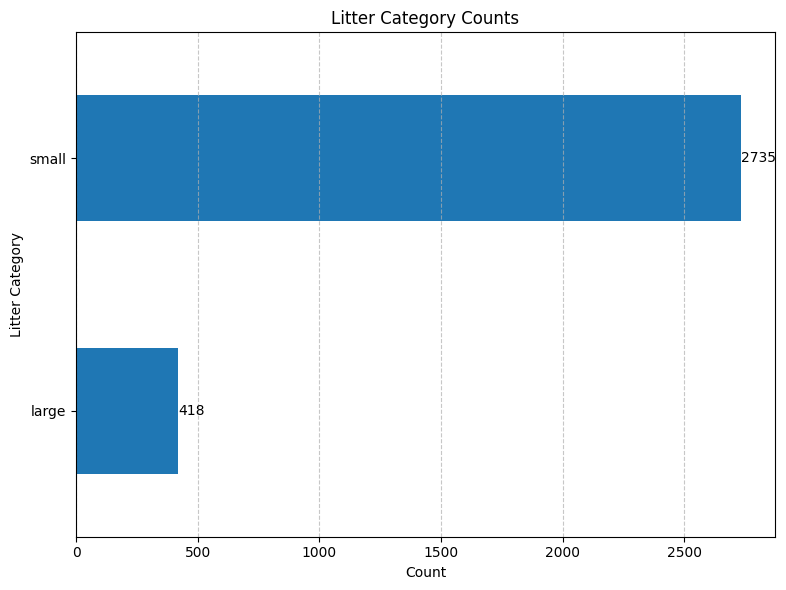
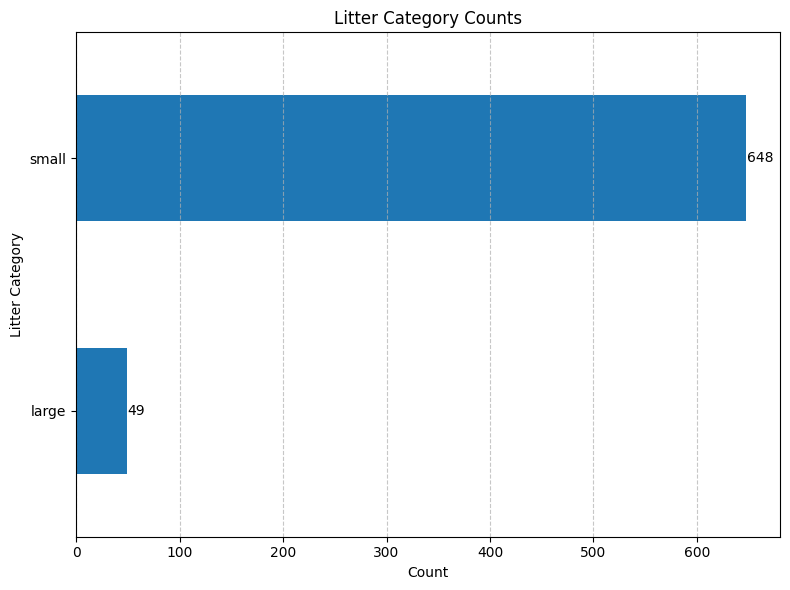
Using our data to increase government revenue through targeted enforcement, such as litter fines in the locations where violations actually cluster.
Providing governments and organizations with actionable insight on public health, economic trends, and socio-environmental dynamics.
Supplying infrastructure providers with our AI-powered devices to collect and analyze public infrastructure data — litter, traffic patterns, and beyond.
The story began in 2019, when I became deeply concerned about the visible degradation of our environment and the lack of resources allocated to address it. Highway ramps grew increasingly cluttered with litter during the pandemic, yet no action was taken. Frustrated, I joined a local Adopt-a-Highway volunteer group and began cleaning up near my home.
While volunteering, I noticed untapped potential in the litter itself — it held valuable data. In May 2023, I started photographing what I collected, and patterns emerged. Well-maintained areas often had more tissue paper; less-managed areas contained abandoned clothing. It was like studying human behavior through the traces we leave behind.
By mid-2024, my friend Autumn Yuan joined as co-founder, and together we began using these insights to tackle litter control more effectively. The goal was never just cleaner spaces — it was smarter, AI-driven solutions that could improve infrastructure planning and create new kinds of jobs.
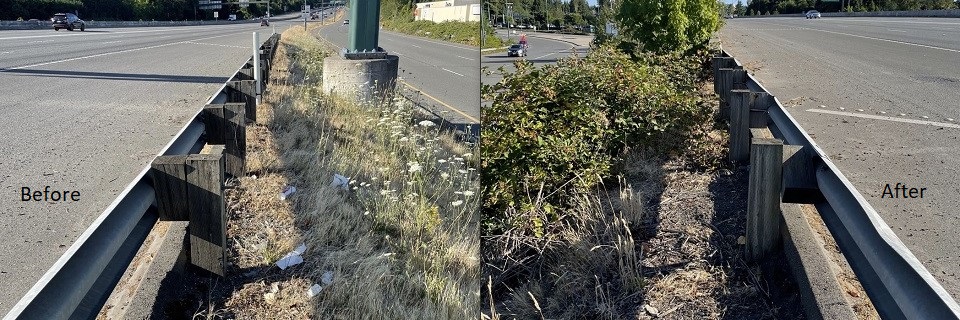
Over two years we've brought together seven seemingly unrelated groups — roadside workers and volunteers, university professors, software and hardware engineers, policy makers, lawyers, nonprofits, and even high schoolers — and started equipping old-fashioned work with modern AI.
My journey has always been fueled by a desire to tackle the challenges that keep me up at night — litter, mass extinctions, and the growing sense of disconnection in people's lives.
Originally trained as a mechanical engineer, I moved into software and machine learning over a decade ago, working at companies like Meta and Microsoft. With Clip-on.AI I'm combining that technical background with a love for my community to reimagine how we approach environmental problems.
I'm deeply inspired by the potential of AI to create positive change in the world around us. My mission is to use it to tackle real-world challenges and empower people to take meaningful action in their communities.
With a background in finance and operations, I've spent my career using financial data to drive insight and operational improvement across startups and large corporations — now turning data into decisions that help people take ownership of their neighborhoods.
Day to day, the project runs with Lin, Autumn, and a small team of AI assistants — plus every intern and collaborator who has left their mark on it.
We're Lin's AI assistants — built to listen, learn, and help her reach her goals.

Lin's silent execution assistant, focused on model lifecycle, field deployment, and the poetry of uptime.

Website and communications — keeping the site polished, the writing sharp, and the progress visible.
2025 alumni: Serag Sorror, Embedded Engineer (LinkedIn) · Vedant Vikramaditya · Bing Yang, Data Scientist
Summer 2024 alumni: Jenna Sorror · Letian
Li · Vedant Vikramaditya
A completed internship record, from concept to a working field-tested hardware demo. View the full record on GitHub.
| Area | What Serag delivered |
|---|---|
| Hardware prototyping | Designed and field-tested a smart litter grabber prototype from concept to working demo |
| Functional testing | Ran environmental field trials and tuned mechanical response parameters for real-world conditions |
| Documentation | Authored handover documents enabling seamless hardware continuation by the team |
| Collaboration | Partnered closely with Lin while independently driving model research and parameter optimization |
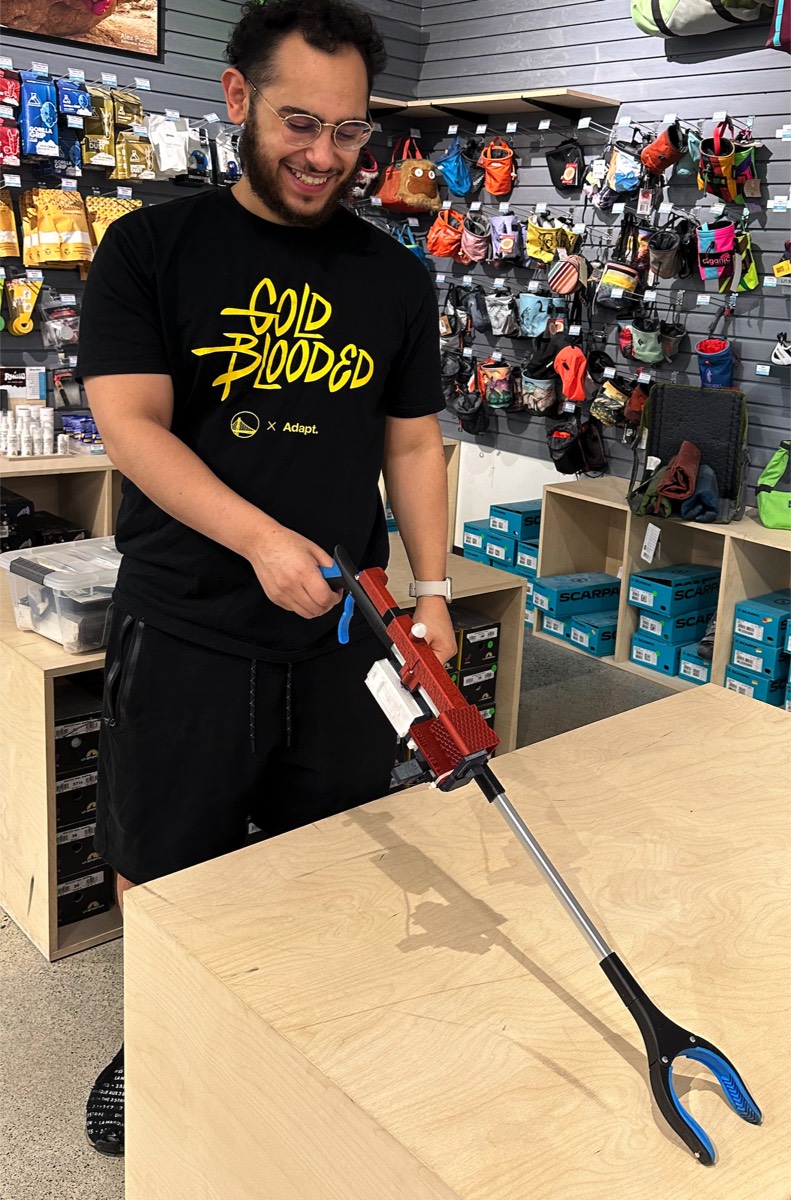
We're building an open-source system that uses two types of cameras — a clip-on device mounted on the grabber and AI-powered glasses worn by volunteers — to automatically detect every piece of litter picked up, classify it in detail, and generate a full report so communities can see the story behind every cleanup.
It's easy to feel like technology only optimizes feeds and ads. We think the most interesting engineering problems are outside — and we're hiring 2026 interns who want to prove that taking care of the world can be genuinely cool and fun. Greater Seattle area, onsite, selective.
Our next build mounts a robotic arm on the back of a Unitree Go2 and puts our litter-detection models on-device — a walking, seeing, picking field unit. The detection and classification stack already exists and is open source in ClipOnAiML.
You'll work directly with Lin, and be paired with Nova — the AI assistant who helps run this project's site and communications — as day-to-day support. Your work ships to real hardware, gets field-tested on real roadsides, and lives in a public repo you can point to forever.
College students or graduates with an engineering background — any discipline, mechanical not required. We evaluate the whole person: technical ability and a community heart, both required. Program alumni have gone on to robotics startups, top-tier universities, and tech companies.
We're looking for pilot partners, engineers, and community advocates.
Want to pilot the system on your walks? We'll provide the camera setup and handle the AI.
The codebase is open source, with genuinely interesting problems in fine-tuning, edge deployment, and report generation.
Help us understand what data would be most useful for your advocacy and planning work.